Physical Address
304 North Cardinal St.
Dorchester Center, MA 02124
Physical Address
304 North Cardinal St.
Dorchester Center, MA 02124


The days of relying solely on local billboards and newspaper ads to sell real estate are long gone. For developers today, the marketplace is no longer just the city where the foundation is poured—it’s the entire world.
As international interest in markets like Dubai continues to surge, developers face a new challenge: how do you sell a vision to someone thousands of miles away? The answer lies in a strategic shift from traditional local marketing to a robust, digital-first global strategy.
Selling off-plan units—properties that exist only on paper or in early construction phases—requires a high level of trust and a compelling narrative. When your potential buyer is in London, New York, or Singapore, you cannot rely on a physical handshake. Instead, you need digital tools that bridge the geographical gap, turning remote curiosity into tangible investment.
This guide explores how forward-thinking developers can harness the power of digital marketing to reach international investors, build credibility across borders, and secure sales before the ground is even broken.
When selling off-plan, you aren't selling a building; you are selling a future lifestyle. For international buyers who cannot visit a sales centre, the digital narrative is the only reality they have.
High-net-worth individuals (HNWIs) are not swayed by basic floor plans. They need to feel the exclusivity and potential of the project. Digital storytelling moves beyond simple descriptions to create an emotional connection. This involves high-production video content that showcases not just the amenities, but the feeling of living in the space.
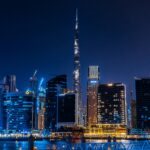
Consider the lifestyle associated with a luxury development in Dubai. Your content should capture the morning view from the balcony, the proximity to world-class dining, and the tranquility of the private pool. By weaving these elements into a cohesive digital story, developers can transport a viewer from their office in Hong Kong directly to a penthouse in Downtown Dubai.
Having a beautiful project is meaningless if the right people don't see it. This is where Search Engine Optimisation (SEO) and precision-targeted advertising come into play.
To attract global capital, your digital presence must be visible where investors are searching. This means optimizing your content for keywords that international buyers use, such as "buy off-plan property in Dubai," "luxury real estate investment UAE," or "high-yield property developments."
However, effective SEO goes deeper than generic terms. It involves creating content that answers specific questions foreign investors might have, such as inquiries about Golden Visas, tax implications for non-residents, or ROI projections for specific districts. By becoming a resource for these answers, you build authority and trust.
While SEO builds long-term organic traffic, paid advertising delivers immediate visibility. Platforms like Google Ads and Meta allow developers to target specific demographics—such as investment bankers in London or tech entrepreneurs in Silicon Valley—with laser precision.
Retargeting is particularly powerful in this context. A potential buyer might view a project brochure and leave the site. With retargeting, you can serve them a follow-up ad a week later highlighting a limited-time payment plan, keeping your project top-of-mind during their decision-making process.
While Instagram and TikTok are excellent for visual storytelling, LinkedIn remains the powerhouse for B2B networking and institutional partnerships. For developers looking to secure bulk deals or joint ventures, this professional network is indispensable.
LinkedIn allows developers to identify and connect with family offices, real estate investment trusts (REITs), and wealth management firms globally. It is not just about cold outreach; it is about establishing thought leadership.
By consistently sharing progress updates, market analysis, and insights into construction milestones, developers can demonstrate transparency and competence. This builds the kind of professional credibility that institutional investors require before committing significant capital to an off-plan project.
Technology has dismantled the barrier of distance. Virtual Reality (VR) and Augmented Reality (AR) have revolutionized the off-plan sales process, allowing remote buyers to walk through a property that has not yet been built.
A 360-degree virtual tour creates a sense of spatial awareness that 2D renders simply cannot match. Prospective buyers can explore the layout, check the view from different floors, and even visualize furniture placement. This immersive experience significantly reduces the hesitation associated with buying unseen property.
Artificial Intelligence is also reshaping how developers present investment data. AI tools can analyze vast amounts of market data to provide predictive analytics on property appreciation and rental yields. Presenting a potential investor with an AI-backed report on future value adds a layer of objective data to your sales pitch, reinforcing the financial viability of the investment.
Scaling operations to a global level often requires more than just marketing; it requires strategic capital and expertise. This is where Joint Ventures (JV) become a critical growth engine.
A Joint Venture allows developers to pool resources with landowners and investors to execute larger, more ambitious projects. For a landowner, partnering with an experienced developer unlocks the value of their asset without the operational headache of construction. For developers, it provides access to prime land banks without the heavy upfront acquisition costs.
These partnerships are particularly effective in markets like Dubai, where the appetite for luxury off-plan developments is high. By structuring a JV, developers can leverage the financial strength and networks of their partners to amplify their global marketing reach, sharing the risk while maximizing the potential returns.
In an industry often critiqued for opacity, Mafhh.io stands out by facilitating transparent, global real estate collaborations. As a specialist in joint ventures, Mafhh connects landowners, developers, and investors to create high-value projects in Dubai.
Mafhh.io leverages a digital-first approach to streamline these complex partnerships. Their platform showcases a portfolio of successful joint venture projects, such as Zenith One and One By Preston, demonstrating a track record of delivery.
By providing clear services ranging from legal compliance to project management and sales strategies, Mafhh removes the friction often associated with cross-border real estate deals. Their emphasis on transparency attracts international investors who might otherwise be wary of foreign markets. Through their digital presence, they highlight their expertise in turning raw land into profitable business hubs and luxury residential spaces, proving that the right digital strategy can build trust and drive substantial investment.
The real estate market is evolving, and the developers who adapt to the digital landscape will lead the race. Selling off-plan units globally is no longer just about having the best architect or the prime location; it is about who can tell the most compelling story to the widest audience.
By integrating immersive technology, data-driven targeting, and transparent digital platforms into their strategy, developers can break down geographical barriers. Whether it is through a LinkedIn connection that leads to a bulk deal or a virtual tour that convinces a buyer in New York to invest in Dubai, the future of real estate sales is undeniably digital.
To stay competitive, developers must view digital marketing not as an optional add-on, but as the foundation of their global sales strategy.